Probiotics for Dogs and Cats: Which Strains Work, and How to Use Them
The pet probiotic market is booming, but most products are backed by weak evidence. Here's how to distinguish the science-supported strains from the marketing noise.
PetFoodIQ Editorial Team
2026-03-02 · 5 min read
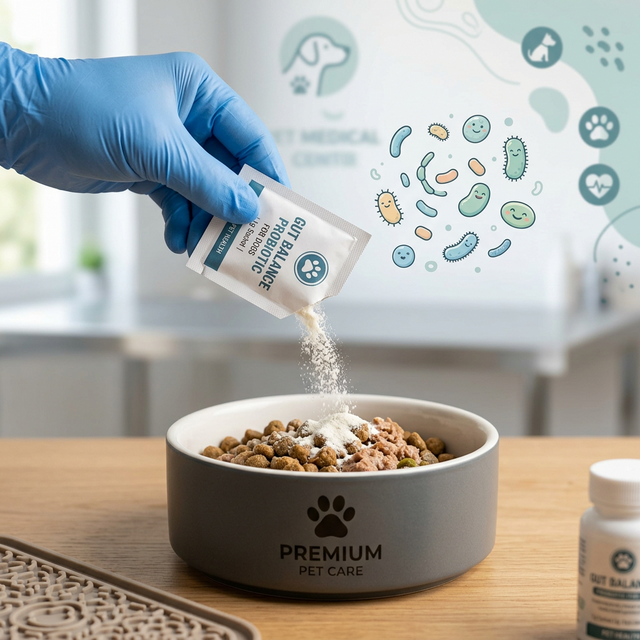
What Are Probiotics?
Probiotics are live microorganisms that, when administered in adequate amounts, confer a health benefit on the host. The key words are "adequate amounts" and "confer a health benefit" — both of which require specific evidence for specific strains.
This is where most pet probiotic products fail: they contain strains that have little or no evidence of benefit in dogs or cats, at dosages that may be insufficient, and with shelf-life stability that's often questionable.
Why Not Just Use Human Probiotics?
Human-targeted probiotics contain strains selected for human gut microbiome colonization. The dog and cat gut microbiomes differ significantly from human microbiomes — both in microbial composition and the conditions inside the gut (pH, transit time, bile salt concentrations).
The result: Human strains are generally safe for pets but may have reduced efficacy, as they are less likely to colonize and persist in a canine or feline gut environment.
Occasionally, human-targeted Lactobacillus rhamnosus GG (LGG) is prescribed for dogs in some veterinary contexts and has some evidence in dogs. But purpose-formulated veterinary probiotics are generally preferred.
Evidence-Based Strains for Dogs
1. Enterococcus faecium SF68
- Evidence level: Strongest for dogs. Multiple controlled trials.
- Benefits shown: Reduces severity and duration of acute diarrhea; modulates intestinal immune response; beneficial during antibiotic therapy.
- Products: FortiFlora (Purina), which contains SF68, is the most studied probiotic in veterinary medicine. Multiple clinical trials specifically on this strain.
- Dosage: 1 sachet/day (5 × 10⁷ CFU) as tested in clinical trials.
2. Lactobacillus acidophilus DSM 13241
- Evidence level: Moderate. Some controlled studies in dogs.
- Benefits shown: May reduce signs of acute diarrhea and improve stool quality.
- Note: Strain designation matters — different L. acidophilus strains have different effects.
3. Bifidobacterium animalis AHC7
- Evidence level: Moderate. Specifically tested in dogs.
- Benefits shown: Reduced duration of acute idiopathic diarrhea in shelter dogs.
- Product: Used in Purina Pro Plan Veterinary Supplements FortiFlora Canine.
4. Lactobacillus rhamnosus GG (LGG)
- Evidence level: Moderate, mostly from human studies with some dog data.
- Note: A human-derived strain, but has some evidence in dogs for diarrhea management.
Evidence-Based Strains for Cats
Research in cats lags behind dogs, but some evidence exists:
1. Enterococcus faecium SF68
- Same strain as in dogs. FortiFlora Feline contains this strain.
- Evidence for: Reducing viral (feline parvovirus) diarrhea duration; modulating gut immunity.
2. Lactobacillus acidophilus DSM 13241
- Some evidence for improving stool quality in cats.
What Probiotics Are Actually Good For
Well-supported uses:
- Acute diarrhea (idiopathic) — reduces severity and duration
- Antibiotic-associated diarrhea — helps restore microbiome disruption during and after antibiotic therapy
- Stress-related gut upset — boarding, travel, new pet introductions
- Post-surgical recovery — supporting gut microbiome after hospitalization
Emerging / limited evidence:
- Inflammatory bowel disease (IBD) — some benefit seen, but evidence is not definitive
- Atopic dermatitis — the gut-skin axis is an active research area; results mixed
- Anxiety-related behaviors — gut-brain axis research ongoing
Not well-supported:
- Routine daily supplementation in healthy pets on complete, balanced diets
- Weight management
- Cancer prevention
CFU Count: How Much Is Enough?
CFU stands for Colony Forming Units — the number of viable organisms per dose. Not all CFU counts are equal because:
- Different strains have different effective doses
- Many organisms die during shelf storage, especially in non-refrigerated products
- Products must maintain CFU at the time of consumption, not just at time of manufacture
Minimum effective doses seen in dog studies:
- E. faecium SF68: 5 × 10⁷ CFU/day (50 million)
- General range in published trials: 10⁸ to 10¹⁰ CFU/day (100 million to 10 billion)
Important: A product claiming "5 billion CFU" means nothing if those organisms are dead by the time they reach your pet.
Stability tip: Refrigerated products and individually sealed sachets maintain CFU better than bulk containers stored at room temperature.
Prebiotics: The Fuel for Probiotics
Prebiotics are non-digestible dietary fibers that selectively feed beneficial gut bacteria. Common types in pet food:
- FOS (fructooligosaccharides): Found in chicory root, inulin. Feeds Bifidobacterium and Lactobacillus.
- MOS (mannan-oligosaccharides): Derived from yeast cell walls; may reduce pathogen adhesion.
- Psyllium husk: Soluble fiber; supports overall stool consistency.
Combining a probiotic with a prebiotic substrate (synbiotic) may improve probiotic persistence. Many veterinary probiotic products already include both.
How to Use Probiotics
Acute diarrhea: Start immediately at the onset of loose stools. Continue for 5–7 days or until stools normalize for 48 hours.
During antibiotic therapy: Start the probiotic at the same time as the antibiotic (give 2+ hours apart from the antibiotic dose to avoid the antibiotic killing the probiotic organisms). Continue for 1–2 weeks after finishing antibiotics.
Stress situations: Start 3–5 days before the anticipated stressor (vet visit, boarding, travel) and continue through the stressor.
FAQ
Can I give my dog yogurt instead of a probiotic supplement? Yogurt contains Lactobacillus bulgaricus and Streptococcus thermophilus — strains with minimal evidence for benefit in dogs. It also contains lactose, which many adult dogs digest poorly. If you want probiotic benefits, use a veterinary-formulated product with studied strains.
How long should I give probiotics? For acute conditions: 5–14 days. For chronic conditions like IBD: indefinite under veterinary supervision. There's no evidence that long-term continuous use in healthy pets is beneficial.
Are there any safety concerns? Probiotics are generally very safe. Rare risk: immunocompromised animals may be more susceptible to opportunistic infections from live bacterial supplements — consult your veterinarian first if your pet is on immunosuppressive therapy.
Advertisement