Pet Obesity: Health Risks, Causes, and How to Help Your Overweight Dog
Over 50% of dogs in the US are overweight. Here's everything you need to know to help your pet reach a healthy weight safely.
PetFoodIQ Editorial Team
2026-02-19 · 5 min read
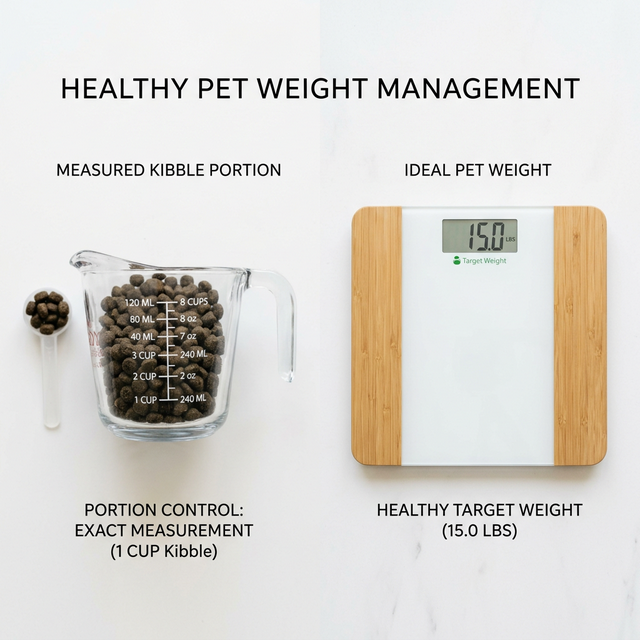
The Pet Obesity Epidemic
According to the Association for Pet Obesity Prevention (APOP), 56% of dogs and 60% of cats in the United States are classified as overweight or obese. Despite being the most preventable health condition in pets, obesity rates continue to rise — driven by overfeeding, excessive treats, insufficient exercise, and owners not recognizing what a healthy weight looks like.
Health Consequences of Obesity in Dogs
Obesity is not merely cosmetic. Clinical consequences include:
- Orthopedic disease: Extra weight accelerates joint degeneration and worsens hip and elbow dysplasia. A 2006 landmark study showed lean-fed Labradors lived an average of 2.5 years longer than their overweight littermates.
- Diabetes mellitus: Obese dogs have increased insulin resistance, with significantly higher risk of Type 2 diabetes.
- Cardiovascular disease: Extra body mass increases cardiac workload. Obese dogs are 3× more likely to develop cardiac problems.
- Respiratory compromise: Especially in brachycephalic (flat-faced) breeds — excess fat tissue further narrows already-compromised airways.
- Reduced life expectancy: Multiple studies confirm obesity reduces canine lifespan by 2–2.5 years on average.
- Increased anesthetic risk: Obesity complicates surgery and anesthetic management.
- Reduced immune function: Adipose tissue releases inflammatory cytokines that chronically suppress immune response.
Identifying Obesity: Body Condition Score (BCS)
Don't rely on the scale alone — body composition matters more than weight. Use the 9-point Body Condition Score:
- BCS 1–3: Underweight — ribs highly visible, no fat covering, marked muscle loss
- BCS 4–5: Ideal — ribs easily felt but not visible, defined waist, minimal abdominal fat
- BCS 6–7: Overweight — ribs felt with pressure, waist barely visible, fat deposits over spine
- BCS 8–9: Obese — ribs not palpable, no waist, large fat deposits everywhere
Safe Weight Loss Protocol
Never put a dog on a crash diet. Rapid weight loss (more than 2% body weight per week) can cause dangerous fat mobilization disorders.
Safe weight loss rate: 1–2% of body weight per week
Step 1: Calculate target weight (typically BCS 4–5 ideal) Step 2: Calculate calories for weight loss: RER × 1.0 (no activity multiplier) Step 3: Choose a high-protein, high-fiber, low-fat diet Step 4: Measure all food by weight (not volume) Step 5: All treats come from daily calorie allowance (treats should be ≤10% of daily calories) Step 6: Weigh monthly, adjust intake as weight decreases
Exercise Prescription
Start low and build gradually, especially for very overweight dogs. Even 20–30 minutes of walking daily makes a measurable difference. For dogs with joint pain, water therapy (hydrotherapy) is an excellent low-impact option.
Advertisement