Hydration for Pets: How Much Water Does Your Dog or Cat Actually Need?
Dehydration is one of the most overlooked health risks in pets. Learn how to ensure your pet drinks enough water every day.
PetFoodIQ Editorial Team
2026-02-17 · 5 min read
Why Hydration Is Critical
Water is the most essential nutrient for any living organism. In dogs and cats, water comprises 60–70% of adult body weight and participates in virtually every physiological process: nutrient transport, waste removal, temperature regulation, joint lubrication, and cellular function.
Even mild dehydration (2–5% of body weight in water loss) impairs cognitive function, reduces athletic performance, and stresses the kidneys and cardiovascular system.
How Much Water Does a Dog Need?
The standard guideline is: Dogs: 50–100 ml of water per kg (2.2 lb) of body weight per day
Example: A 20 kg (44 lb) dog needs approximately 1–2 liters of water per day.
Factors that increase water needs:
- Hot weather or high humidity
- High activity level
- Dry kibble diet (only 8–12% moisture)
- Pregnancy or nursing
- Illness (especially fever, vomiting, diarrhea)
- Certain medications (diuretics)
The Special Case of Cats
Cats evolved as desert animals with naturally low thirst drive. They concentrate urine more efficiently than dogs and obtain much of their water needs from prey in the wild.
This low thirst drive becomes problematic with dry kibble diets. Cats fed exclusively dry food are chronically mildly dehydrated, which significantly increases the risk of:
- Urinary tract infections (UTIs)
- Feline Lower Urinary Tract Disease (FLUTD)
- Chronic kidney disease (CKD) — the #1 health problem in senior cats
Recommendation for cats: Feed wet food as a primary diet, or at least supplement with wet food. A cat eating only dry food may consume 50% less water than they need.
Signs of Dehydration
Skin turgor test: Gently pinch the skin at the scruff of the neck. Healthy, hydrated skin snaps back immediately. Dehydrated skin returns slowly (>2 seconds) or tents in place.
Other signs: Dry, tacky gums; sunken eyes; lethargy; reduced urine output or concentrated (dark yellow) urine; loss of skin elasticity.
How to Encourage Drinking
- Multiple water stations: Place bowls in several locations, especially for cats
- Fresh water daily: Stale water is less appealing — change daily and clean bowls every 2–3 days
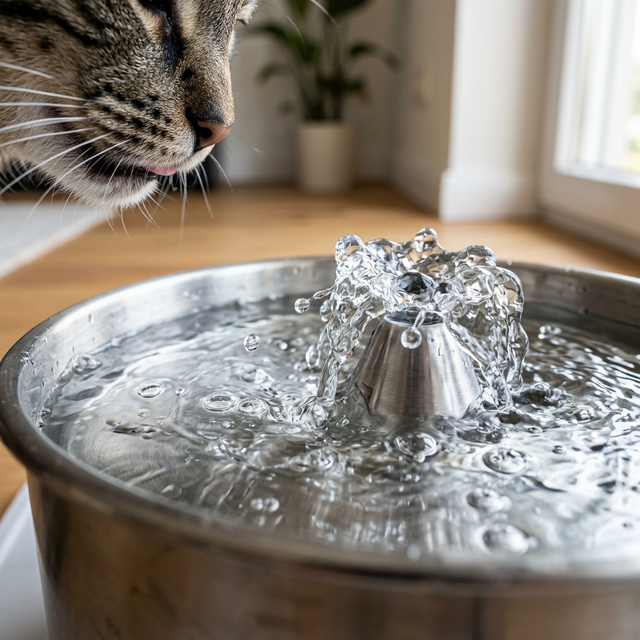
- Water fountains: Moving water stimulates drinking instinct in cats (many cats prefer running water)
- Wet food or water additions: Add 1–2 tablespoons of low-sodium chicken broth to water bowls
- Water bowl placement: Keep away from litter boxes and food bowls — many cats dislike drinking near where they eat or eliminate
- Bowl material: Some pets dislike plastic bowls (bacterial biofilm). Ceramic or stainless steel are preferred.
Advertisement