Cat Nutrition 101: Why Cats Are Not Small Dogs
Cats are obligate carnivores with nutritional requirements completely different from dogs. Feeding them wrong can cause blindness, heart failure, or early death. Here's the science every cat owner must know.
PetFoodIQ Editorial Team
2026-03-08 · 5 min read
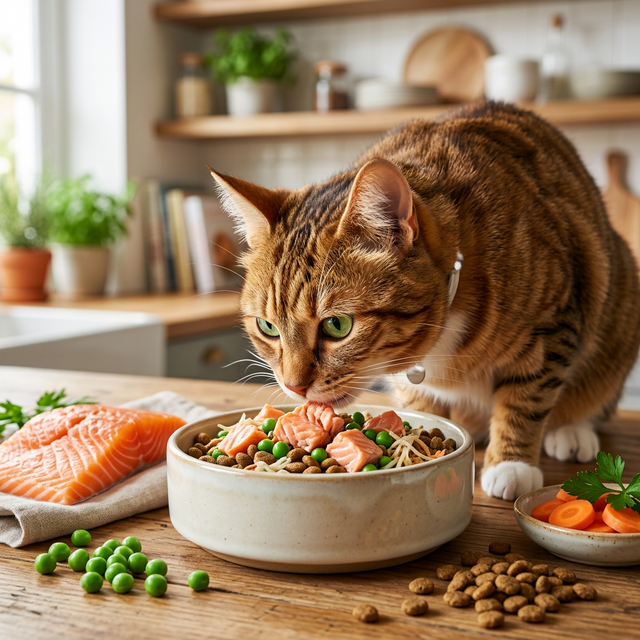
Cats Are Obligate Carnivores — This Changes Everything
Dogs are omnivores: they can thrive on a balanced mix of animal and plant proteins. Cats are obligate carnivores — meaning their metabolism is hardwired to require specific nutrients found only in animal tissue. They lack the enzymatic machinery to synthesize several critical compounds that dogs and humans can make on their own.
This isn't a preference. It's a biochemical reality with life-or-death consequences if ignored.
5 Nutrients Cats Cannot Synthesize (But Dogs Can)
1. Taurine
- Why critical: Taurine is essential for retinal function, cardiac muscle contraction, immune response, and bile acid conjugation.
- What happens without it: Dilated cardiomyopathy (DCM) and central retinal degeneration — both largely irreversible.
- AAFCO minimum: 0.1% DMB (dry matter basis) for adult maintenance; 0.2% for growth/reproduction.
- Plant sources: Virtually zero. Only animal tissues (heart, liver, seafood) contain meaningful taurine.
2. Arachidonic Acid (ARA)
- Dogs can convert linoleic acid (omega-6) into ARA. Cats cannot — they lack the delta-6-desaturase enzyme activity needed for this conversion.
- ARA is essential for skin barrier integrity, reproduction, and inflammatory signaling.
- Source: Animal fats (especially poultry fat, fish).
3. Preformed Vitamin A (Retinol)
- Dogs convert beta-carotene from plants into Vitamin A. Cats have virtually no beta-carotene dioxygenase activity — they cannot make this conversion.
- Must be supplied as preformed retinol from animal sources (liver, fish oil).
- Plant-sourced "Vitamin A" (beta-carotene) is useless for cats.
4. Niacin (Vitamin B3)
- Mammals typically synthesize niacin from tryptophan. Cats have high picolinic acid carboxylase activity that diverts tryptophan away from niacin synthesis.
- Must be supplied directly through animal proteins.
5. Arginine
- Every meal without arginine can be fatal for cats. Cats have extremely limited ability to synthesize arginine via the urea cycle (low pyrroline-5-carboxylate synthase activity in the intestine).
- A single arginine-deficient meal can cause hyperammonemia — neurological symptoms within hours.
- Thankfully, most animal proteins are rich in arginine.
Protein Requirements: Cats Need Far More Than Dogs
| Species | AAFCO Minimum Protein (DMB) | Typical Optimal Range |
|---|---|---|
| Adult Dog | 18% | 22–30% |
| Adult Cat | 26% | 35–50% |
| Kitten | 30% | 40–55% |
Cats use protein continuously for energy even when calories are sufficient — a trait called obligate gluconeogenesis. They cannot "downregulate" protein catabolism the way dogs do when protein intake is low. This means a low-protein diet causes muscle wasting in cats, even if calorie intake is adequate.
Carbohydrates: Cats Have Very Limited Tolerance
Cats evolved on prey diets with roughly 2–5% carbohydrate content. Their carbohydrate metabolism reflects this:
- Low amylase activity: Feline pancreatic amylase is about 5% of that in dogs. Cats digest starch poorly.
- No salivary amylase: Unlike humans and dogs.
- Low glucokinase activity: Cats struggle to regulate blood glucose spikes after carbohydrate-heavy meals.
Practical guideline: Cat food carbohydrates on a dry matter basis should ideally be below 10–15%. Many dry kibble formulas contain 30–45%, which is nutritionally mismatched.
Water Intake: The Hidden Crisis in Dry-Fed Cats
Cats evolved in arid environments (African wildcat ancestors). Their thirst drive is naturally low — they evolved to get most water from prey (which is ~70% water). This creates a chronic mild dehydration problem in dry-food-fed cats.
Consequences of chronic low water intake:
- Concentrated urine → struvite or calcium oxalate crystal formation
- Feline idiopathic cystitis (FIC)
- Chronic kidney disease (CKD) — the leading cause of death in domestic cats over age 10
WSAVA recommendation: For cats with a history of urinary issues, wet food or a mix of wet + dry is strongly preferred over dry-only feeding.
Comparing Cat vs. Dog Nutritional Profiles (Dry Matter Basis)
| Nutrient | Cat Minimum | Dog Minimum | Why Different |
|---|---|---|---|
| Protein | 26% | 18% | Obligate gluconeogenesis |
| Fat | 9% | 5% | ARA synthesis requirement |
| Taurine | 0.1% | Not required | Cats cannot synthesize |
| Vitamin A | 1,000 IU/kg | 1,250 IU/kg (from beta-carotene ok) | Cats need preformed retinol |
| Niacin | 60 mg/kg | 13.6 mg/kg | Limited tryptophan conversion |
Common Mistakes Cat Owners Make
Feeding dog food to cats (even occasionally): Dog food does not meet feline taurine, arachidonic acid, or niacin requirements. Long-term feeding causes serious deficiencies.
Feeding "vegan" or plant-based diets: Fundamentally incompatible with feline obligate carnivore biology. Taurine, ARA, retinol, and arginine cannot be adequately supplied from plant sources alone.
Assuming "grain-free" means low-carb: Many grain-free cat foods replace grains with potatoes or legumes — the carbohydrate content remains high. Check the actual NFE (nitrogen-free extract) calculation.
Adding large amounts of plain fish: Plain fish (especially raw) contains thiaminase (an enzyme that destroys thiamine/B1). Feeding large amounts of raw fish can cause thiamine deficiency — neurological symptoms.
How to Evaluate a Cat Food
- Protein ≥ 35% DMB — ideally named animal sources (chicken, salmon, turkey) listed first
- Taurine listed — or confirmed adequate by feeding trial
- Low NFE/carbohydrate — calculate as: 100 - protein% - fat% - fiber% - moisture% - ash%
- AAFCO complete and balanced statement with life stage match
- WSAVA-recommended manufacturer — full-time board-certified veterinary nutritionist on staff, conducts feeding trials
FAQ
Can cats eat the same food as dogs? No. Dog food lacks the taurine, arachidonic acid, and preformed vitamin A that cats require. Even occasional feeding as a supplement is fine, but dog food should never be a primary cat diet.
Do cats need wet food? Not strictly necessary if water intake is adequate, but wet food is the best tool to ensure sufficient hydration — especially important for cats prone to urinary tract issues or kidney disease.
How much protein is too much for cats? Healthy cats handle high-protein diets well. Cats with chronic kidney disease (CKD) may require phosphorus restriction, but current evidence does not support severe protein restriction in CKD cats — consult your veterinarian for individual guidance.
Advertisement